

Emotion Regulation for Kids: Practical Strategies Every Parent Can Use
Helping children learn emotion regulation for kids is one of the most powerful gifts a caregiver can give. Emotion regulation refers to the ability to notice feelings, understand them, calm down when upset and act in ways that are helpful and safe. For children this skill supports learning, friendships and overall wellbeing. This article shares clear explanations and practical techniques you can use at home, in school and while traveling with family.
Why Emotion Regulation for Kids Matters
Early development of emotion regulation for kids builds resilience. Children who can manage strong emotions are more likely to focus in class, form healthy relationships and handle setbacks. They show fewer behavior problems and experience less anxiety and anger. Teaching these skills early reduces stress for the whole family and creates a calmer home environment.
Common Signs a Child Needs Support
Not every child who struggles shows the same signs. Watch for frequent intense tantrums that last a long time, trouble calming after being upset, difficulty transitioning between activities, repeated meltdowns over small changes, or aggression toward others. If a child avoids social interactions or has a sudden drop in school performance it could also indicate a need for support with emotion regulation for kids.
Foundational Principles to Teach Emotion Regulation for Kids
Before learning specific techniques, caregivers can focus on a few core principles that make teaching effective.
- Validation first: Acknowledge feelings before trying to change them. A simple phrase such as I can see you are really upset helps a child feel understood.
- Model calm: Children learn by watching adults. Use calm words and steady breath when managing your own emotions to show healthy regulation in action.
- Make skills concrete: Turn abstract ideas into clear steps so a child can practice and remember strategies independently.
Practical Strategies You Can Use Today
Below are effective, research based techniques you can introduce gradually while keeping the process playful and supportive.
- Teach naming of feelings Use a feelings chart or simple phrases such as I feel sad or I feel angry. Naming reduces emotional intensity and helps children begin to regulate.
- Practice belly breathing Encourage long slow breaths into the belly and out slowly. Make it fun with bubbles or blowing a feather to help younger children learn control.
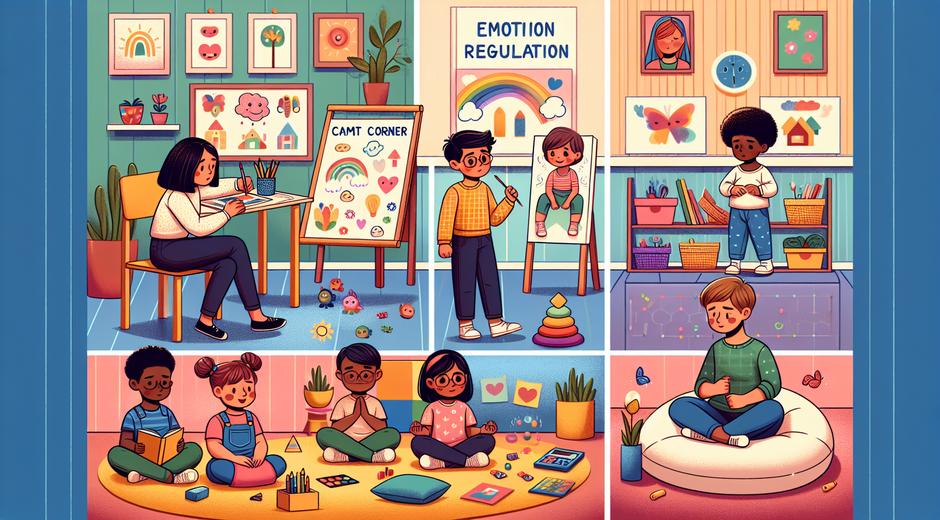
- Use a calm down corner Create a small cozy spot with sensory toys and a soft blanket where a child can choose to calm down. Over time they will learn to use the space proactively.
- Teach problem solving After a child is calm ask what happened and what could be done next time. Guide them to generate options and pick one to try.
- Label your own emotion regulation Narrate aloud when you are calming such as I am taking deep breaths to feel better. This models language and action at the same time.
- Use role play and stories Practice scenarios with toys or read books that show characters managing feelings. Pause and ask what the character might try to feel better.
- Offer sensory tools Some children calm quickly with a weighted stuffed toy, fidget object or noise reducing headphones. Let children choose their tools when appropriate.
- Keep routines consistent Predictable schedules reduce daily stress so a child can use regulation skills more easily. Clear bedtime and mealtime routines help maintain emotional balance.
How to Respond During a Big Emotion
When a young person is highly upset follow these steps. First provide safety and limit setting if needed. Then validate the feeling without joining the intensity. Offer one simple coping tool such as breathing or a quiet walk together. After the moment has passed, gently help them reflect and practice an alternative behavior. This sequence supports learning without shame.
Tailoring Techniques by Age
Strategies for emotion regulation for kids should match a child s developmental stage.
- Toddlers Use short simple labels for feelings and immediate comfort. Visual schedules help with transitions.
- Preschoolers Practice breathing and offer choices to build a sense of control. Use play to rehearse skills.
- School age children Teach problem solving and encourage journaling or drawing to process feelings.
- Teens Respect independence while offering tools for stress management such as exercise, sleep hygiene and planning for difficult social situations.
When to Seek Professional Help
If a child s emotional outbursts are frequent and impair daily functioning, or if there are worries about trauma or developmental differences, consult a licensed mental health professional. Early support is helpful and may involve therapy that focuses on skill building and family coaching.
Incorporating Emotion Regulation into Everyday Routines
Small daily practices add up. Morning check ins where a child names their feeling and picks a coping tool can set a calm tone. Use praise that recognizes effort rather than outcomes such as I noticed you took deep breaths when you were angry. That reinforces the skill learning process.
Using Travel and New Experiences as Learning Opportunities
Trips and family outings provide natural practice for emotion regulation for kids. Preparing children with simple plans, role playing potential scenarios and packing familiar calming items helps them manage changes. If you are looking for family friendly travel ideas that make learning fun check out TripBeyondTravel.com for inspiration that pairs relaxation and discovery. Travel teaches flexibility and problem solving while strengthening family bonds when handled with supportive routines.
How Caregiver Self Care Supports Children
Parents who prioritize their own rest and stress management are better able to teach and model emotion regulation for kids. Simple caregiver routines such as brief daily exercise, quiet time and asking for help when needed reduce burnout and improve the home climate for learning.
Resources and Ongoing Learning
For practical articles, printable tools and ongoing tips tailored to family life browse resources at coolparentingtips.com where you will find step by step guides and age based activities to help children learn emotion regulation for kids. Regular use of guided activities builds long term capacity and makes emotional skill building a natural part of family life.
Final Thoughts
Teaching emotion regulation for kids is a gradual process that depends on patience, consistency and a supportive relationship. Celebrate small wins and remember that every child moves at their own pace. With clear language, predictable routines and lots of practice, children can learn to notice feelings, calm themselves and choose helpful actions. The result is more confident children and a calmer family life that supports growth for everyone.