

Building Patience in Children
Patience is a quiet super power that helps children manage frustration set realistic goals and enjoy steady progress in school social life and personal projects. Building Patience in Children is not something that happens overnight. It is a skill that parents and caregivers can teach with consistent methods clear expectations and lots of practice. This article explains why patience matters for young minds and offers practical steps you can use at home to help children grow this vital ability.
Why Building Patience in Children Matters
Children with patience tend to do better in school because they can focus on tasks even when results are not immediate. They form stronger friendships because they can take turns listen and tolerate small annoyances. Patience also supports mental health by reducing impulsive reactions and improving problem solving. Teaching patience early creates a foundation for resilience. When children learn to wait calmly and to work toward goals over time they gain the confidence to face challenges.
Set Age Appropriate Expectations
A key part of Building Patience in Children is matching your expectations to a childs developmental stage. Toddlers will naturally have less waiting capacity than school age children. Preschoolers can handle short waits when given activities. Older children can manage longer waits when they understand the reason and see a plan.
Tips for age appropriate expectations
– Young toddlers: Expect short attention spans offer simple choices and provide frequent breaks.
– Preschoolers: Teach time markers like a sand timer or counting to one hundred to show how long a wait will be.
– School age children: Involve them in planning and give small tasks that require step by step effort.
By adjusting demands you prevent frustration and create chances for success which reinforces patient behavior.
Practical Strategies You Can Use Daily
Small daily routines are perfect labs for Building Patience in Children. Use consistent signals so children know what to expect.
Concrete strategies
– Use a visible timer or clock to show how long a wait will be. The visual cue makes waiting feel manageable.
– Offer two step delays. Ask the child to wait while you do a short task and then honor your promise.
– Practice waiting during meals chores and morning routines. Start with short waits and gradually increase time.
– Break bigger tasks into small achievable chunks so children see progress and do not give up.
These routines give children repeated practice which is the fastest way to build skill.
Games and Activities That Teach Patience
Learning can be fun. Games provide safe places to practice waiting turn taking and following rules.
Activity ideas
– Board games: Simple board games teach turn taking and waiting for outcomes.
– Baking together: Cooking requires measuring mixing and waiting for results which shows cause and effect.
– Planting seeds: Watching a plant grow is a powerful lesson in delayed reward.
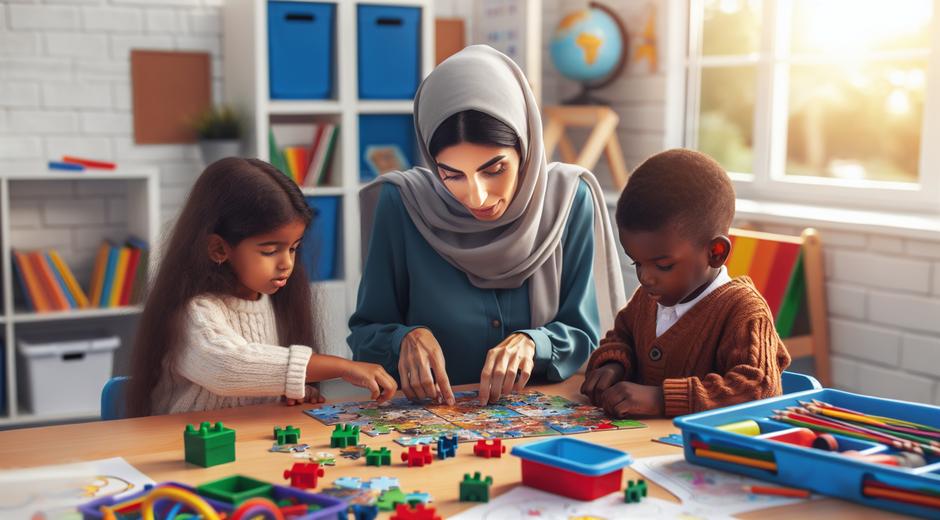
– Puzzle time: Puzzles teach persistence and the satisfaction of finishing a long task.
Rotate activities so children can practice different kinds of patience including waiting for results and working steadily through a challenge.
Teach Emotion Regulation Alongside Patience
Patience often breaks down when children feel overwhelmed or upset. Help them name feelings and learn calming tools.
Steps to teach emotion regulation
– Label feelings: When a child is frustrated say I see you are feeling angry right now. Naming feelings helps them feel understood.
– Teach deep breathing: Show simple breaths in for four hold for a moment and breathe out. Practice together daily.
– Offer calm down spaces: Have a cozy corner with a book or sensory toy where a child can go to calm down.
– Role play: Act out moments that require waiting and model calm responses.
When children have tools to manage strong emotions they are more able to practice patience.
Model Patience as a Parent
Children learn by watching adults. Your reactions set the tone for how they will handle delays and frustration.
Practical modeling tips
– Narrate your behavior: Say I need to wait my turn at the checkout so I will take three deep breaths. Children learn the process.
– Stay consistent: If you promise to wait do so. Broken promises teach children that patience is not valued.
– Show repair: If you lose patience apologize and discuss what you will try next time. This teaches accountability.
Modeling is one of the strongest tools for Building Patience in Children because children copy what they see more than what they are told.
Praise Effort and Celebrate Small Wins
Positive reinforcement encourages repetition of good behavior. Praise the process more than the result.
How to praise effectively
– Be specific: Say I noticed you waited while your sister finished her story and then you asked politely rather than general praise.
– Celebrate progress: Mark small wins with stickers small notes or extra play time. This motivates continued effort.
– Avoid empty praise: Focus on effort and strategies not fixed traits so children learn they can improve.
Consistent positive feedback builds a growth mindset which supports long term skill development.
Handle Setbacks with Patience
Progress is not always steady. Children will react impulsively sometimes. Use setbacks as teaching moments.
How to respond to setbacks
– Stay calm: Your steady response teaches the child how to recover.
– Reflect together: Ask what happened what they felt and what they might try next time.
– Adjust expectations: If a certain routine is too hard right now try a different approach and gradually increase difficulty.
A compassionate approach builds trust and helps children keep trying.
Resources and Consistency Over Time
Building Patience in Children is a long term effort that benefits from consistent daily practice and supportive resources. For additional tips on routines communication and behavior tools visit coolparentingtips.com. If you want age specific activities and research backed games consider checking materials at Museatime.com which offers creative ideas for learning through play.
Final Thoughts on Building Patience in Children
Patience is a skill that grows through practice modeling and clear steps. By setting age appropriate expectations using daily routines and offering emotion regulation tools you help children develop the ability to wait tolerate frustration and work toward goals. Remember to praise effort stay consistent and treat mistakes as lessons. With time patience becomes part of a childs toolkit for success in school relationships and life.
Start small today and watch how steady practice turns short waits into calm confident behavior that serves children for years to come.